|
Institut de Ciències del Mar (ICM-CSIC)
|
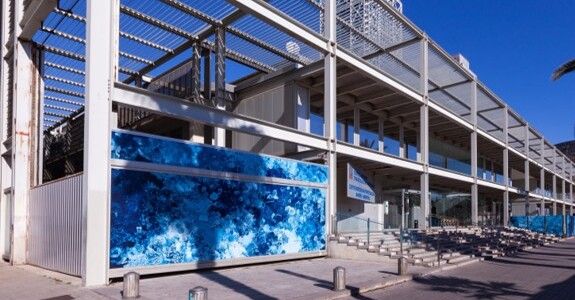
|
|
Type of Research Institution
|
| | Intergovernmental | | | Academic | |  | Governmental, national | | | Private | | | Governmental, local | | | Charity / Foundation |
|
|
|
Address : Passeig Marítim de la Barceloneta, 37-49.
E-08003 Barcelona
SPAIN |
|
Phone :
+34 932 30 95 00
|
|
|
|
Director :
Valentí Sallarès i Casas
|
|
Contact person :
Clara R. Solé
|
|
|
|
|
Number of permanent staff
|
| | Scientists (with doctorate/ PhD) : 328 |
|
|
|
Type of Activities
|
| | Pure research | | | Academic | | | Applied research | | | Education / Outreach | | | Long-term monitoring | | | Policy / Planning / Consultancy | | | Technology for environmental applications | | | Conservation & Protection |
|
|
|
Main fields of research (at present - 6 max)
|
| Climate change and ocean-climate interactions (global climate patterns, climate change processes, and their impacts on coast and marine basins), ocean dynamics and episodic perturbations, marine ecosystems and ecosystem functioning, biological responses to environmental change, abiotic components of ecosystem, marine geohazards and risk awareness
|
|
|
|
Main research collaborations at international level (at present)
|
* With European institutions: CNRS, IFREMER, Sorbonne, GEOMAR, AWI, CNR, BAS, NERSC
*
With North American institutions: NOAA, MIT, SCRIPPS
*
With Latin American institutions: CICESE (Mexico) and CONICET (Argentina)
*
With Asian institutions CAS, CAFS, NUIST
|
|
|
|
Ongoing long-term monitoring programs
|
| * Observation and Characterization of the Marine Environment service, remote Sensing service for ocean surface monitoring, long-term phytoplankton and harmful algal bloom monitoring in collaboration with the Catalan Water Agency, fisheries monitoring through ICATMAR (Catalan Institute for Marine Governance Research) |
|
|
|
Total area dedicated to research (m2)
|
|
|
|
|
Conference room
|
| no | | yes (number of seats : 150 ) |
|
|
|
Research vessel(s)
|
| less than 12 m in length; number of vessels : | | more than 12 m in length; |
|
|
|
Other major research facilities and equipment
|
| * Aquaria and experimental chambers; plankton cultures facility; electron and optical microscopy; flow cytometry; marine molecular biology laboratory; sedimentology, geochemistry and geotechnics laboratory; chemistry analysis laboratory; oceanographic engineering workshop; scientific computing center; marine bioinformatics service; remote sensing unit |
|
|
|
Ecosystem types available nearby
|
| Direct access to sea | | No direct access to brackish / estuarine waters | |
Other ecosystems : Mediterranean Sea (open sea, coastal, and littoral zones) and Barcelona harbour. |
|
|
|
Areas of taxonomic expertise
|
|
|
|
|
Specimen collections
|
| yes | | no | |
Brief description : The ICM-CSIC holds two reference collections. (1) Marine Biological Reference Collections (CBMR) safeguards nearly 40,000 catalogued records of marine specimens, representing more than 2,350 different species, of which 430 are Type specimens, making it the largest exclusively marine scientific collection in Spain. (2) Marine Geological Reference Collections (CGMR) has two main groups of samples and data: a set of over 1,800 marine sediment cores from seabed and sub-seafloor, and more than 200,000 km of seismic lines along with location maps and cartographic products.
More information is available at: Marine Biological Reference Collections and Marine Geological Reference Collections.
|
|
|
|
Hosting facilities for visiting scientists
|
| yes | | no |
|
|
|
Training courses
|
| yes | | no | |
Titles: Ramon Margalef Summer Colloquia
This training course is an annual international summer school in marine sciences. For more information, visit: https://ramonmargalefcolloquia.com/
|
|
|
|
Capacity and brief description of library
|
| Carles Bas Library, named after the distinguished researcher Carles Bas i Peired, is part of the CSIC’s library network, open to the public. One of the largest collections of scientific literature on oceanography and marine sciences in Spain: approximately 8,000 books and 1,500 journals. Subjects covered: marine biology and ecology, marine geology, fisheries, physical oceanography.
|
|
|
 CIESM GUIDE OF COASTAL INSTITUTES IN THE MEDITERRANEAN AND ADJACENT SEAS CIESM GUIDE OF COASTAL INSTITUTES IN THE MEDITERRANEAN AND ADJACENT SEAS
Last update : 2026
|